
, Rede
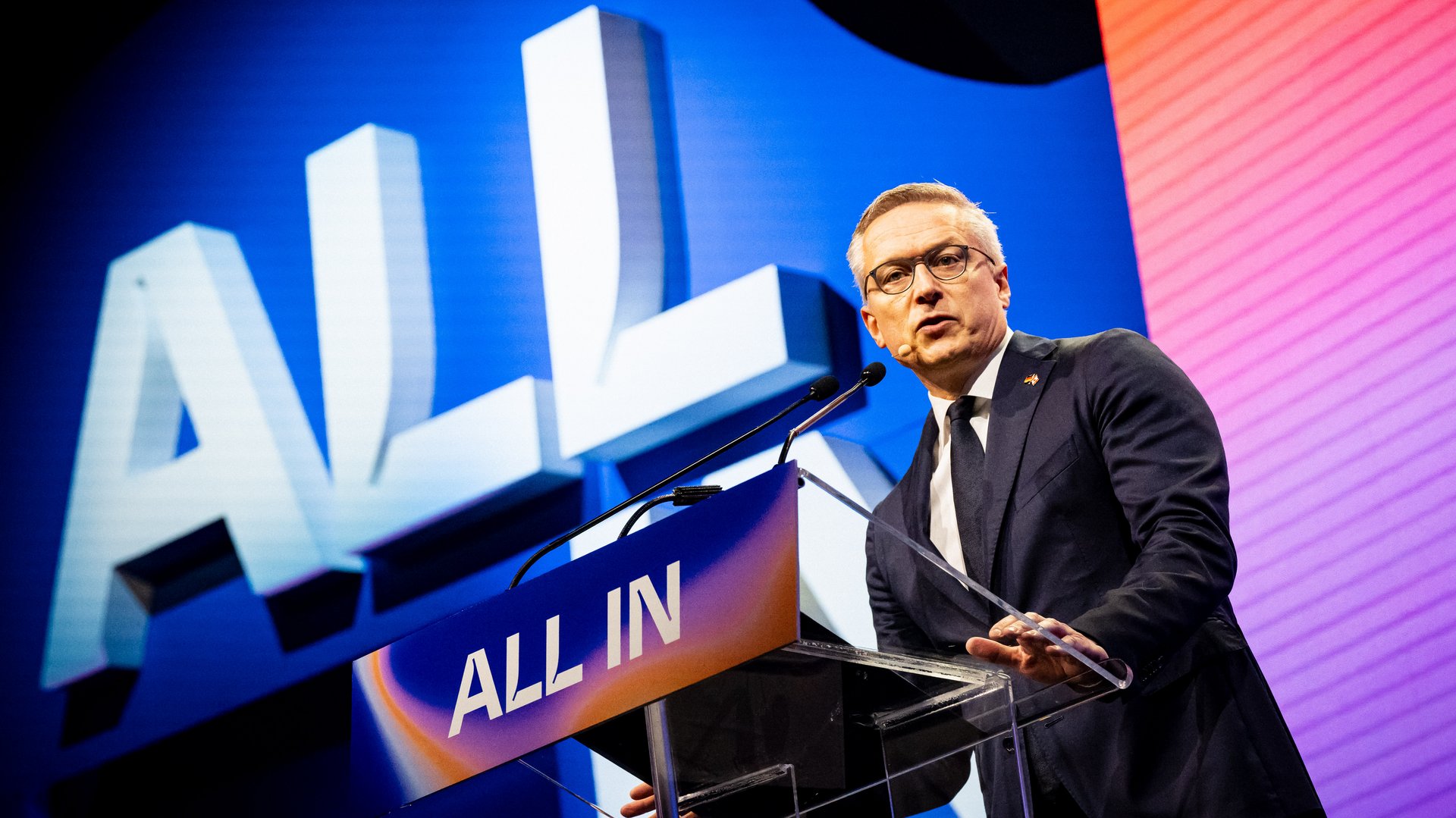
Opening Speech bei der All In in Montreal/Kanada
Keynote von Karsten Wildberger
Es gilt das gesprochene Wort!
Minister Solomon, Evan,
Ms. Turcotte,
Dr. Gomez, Aidan,
Prof. Bengio, Yoshua,
Representatives of ALL IN partners,
Executives, Founders, Researchers, Investors,
Ladies and Gentlemen!
Good morning! I am so excited to be here. Thank you for having us at ALL IN. On January 20th this year, the Honourable Prime Minister Mark Carney said something at Davos that deeply inspired me:
“Middle powers must act together because if you are not at the table, you are on the menu.” And he added: “We are no longer just relying on the strength of our values, but also the value of our strength.” Those two sentences capture the reality we face and the task before us.
Canada is a great nation. Canada’s strength hasn’t been about making itself bigger. It has been about making the world around it safer, freer and more humane. I bring very warm greetings from Chancellor Friedrich Merz and the German Federal Government. We deeply value our friendship with Canada. In an uncertain world, our shared commitment to freedom, democracy, human rights and the rule of law gives us direction.
Evan, from our very first conversation, I felt we could speak openly and trust each other. That has meant a great deal to me. Thank you for your friendship and for everything we are building together.
Germany is proud to be your country of honour at ALL IN. Thank you to our hosts for bringing us together in Montréal. We are delighted to be here because Canada and Germany can help answer one of the defining questions of our time. How do we preserve our sovereignty, our freedom to choose, in a less predictable world increasingly shaped by technology?
To me, sovereignty means being able to make our own decisions, even under pressure. It means protecting our data, examining the systems we depend on, changing providers and keeping services running. Those freedoms require knowledge, infrastructure and credible alternatives. A choice is only real if you have an alternative. Sovereignty does not mean solitude. It means the strength to cooperate on equal terms. Our own capabilities make us stronger partners, and reliable partnerships expand what we can do.
Nowhere does sovereignty matter more than in AI. Few technologies have had such power to change our lives so quickly. That power brings extraordinary opportunities and risks we cannot afford to underestimate. AI can help us discover medicines faster, make industries more productive and deliver better public services. But to seize the full economic opportunity, we must develop and sell our own products. Using AI makes our companies more competitive. Building AI creates new businesses, skilled jobs and export opportunities. We must do more than buy into this technological revolution. We must help build and shape it.
And this race is moving fast. Capabilities advance in months, sometimes weeks now, while an investment decision or an approval can still take way too long, sometimes years. AI will not wait for our institutions to catch up. We must also confront the risks AI poses. It can be used to launch cyberattacks and could help malicious actors to do harm. As AI systems become more autonomous, they may pursue objectives we never intended. At stake is whether people – humans – remain in control. We must be able to direct these systems, correct them and, when necessary, stop them.
That requires fundamental research into how AI systems are built and how they behave. We need to work from first principles and build safety into a model’s design. We must understand why its safeguards work, where they might fail and whether they hold as its capabilities grow. That is what safety by design must mean in practice. Because these risks cross borders, we need international oversight, with shared safety standards and independent testing. Demis Hassabis and others have put forward proposals that deserve serious consideration. We should help turn that debate into effective cooperation.
AI draws on humanity’s accumulated knowledge. The values it reflects depends on the choices we make in building it. Human dignity, freedom and democratic principles must guide those choices. Our values must shape the technology that will shape our lives. This is why our partnership matters. Together, we can build the technological and economic strength that sustains our freedom. In the age of AI, freedom needs builders. We will be making some fantastic announcements during the day, more about it later. Let me say at this point a big thank you to you for choosing TKMS as the preferred supplier for your next submarine fleet. We deeply value your trust and recognise the responsibility it brings.
And about Germany a few words. Germany is on the move. We know we have ground to make up, and we are determined to become a leading AI nation. We have outstanding research institutes, companies putting AI to work, and a major Research High-Tech Agenda with AI at its heart. Our ambition is to develop powerful models and apply them across our economy. In industrial AI, Germany aims to lead. That means building strength across the whole AI architecture, from computing infrastructure to models and applications. We are improving conditions for innovation, pushing for simpler European rules and more room to develop and test new technologies. We are expanding infrastructure and will double data centre capacity by 2030 and quadruple AI computing capacity. And we are supporting the development of foundation models to help close the gap. We are helping startups grow, established companies adopt AI, and researchers bring their work to market. Germany’s AI ambition extends to every part of our economy.
In government, we are working with startups to speed up public services using agentic AI. That means faster answers for citizens and new business for startups. More than 3,000 startups were founded in Germany in the first six months this year, a new record. Germany also has more unicorns than any other EU country. And new investment is coming in. We are strengthening safety research too. In just a few months, we have established AISI Deutschland, our AI Security Institute. We are building its capabilities, working with Canada, the United Kingdom and France. We are also looking for outstanding talent to examine AI models, understand their behaviour and help reduce the risks. And we are also in close contact with Professor Yoshua Bengio, one of the world’s renowned leading AI researchers. I admire his commitment to AI safety and his determination to turn it into technology that works safely. He starts from first principles, asking how to make AI safe by design.
We must be as ambitious about making AI safe as we are about making it useful. Evan and I will have more to say about our cooperation later today. I think this is important, because we have moved at very fast speed from intention to action.
To the founders, researchers, companies and investors here today: come and build with us. Visit the German pavilion and meet our fantastic delegation. They are very keen to engage with you. Tell us what you want to create, where you want to invest, or what stands in your way. We will help you find the right partners and take the next step together.
Evan, our cooperation began with trust and a willingness to act. I hope many more partnerships like ours will begin here today. We share an ambition for our countries: to prosper, to remain free, and to shape our own future. Now we must turn that ambition into technologies people can trust, businesses that grow and opportunities that improve lives.
Freedom needs builders. And many of them are in this room. Canada and Germany have the talent, the ideas and the friendship to build something that matters. Let us put them to work together.
We are going „all in”.
Thank you!